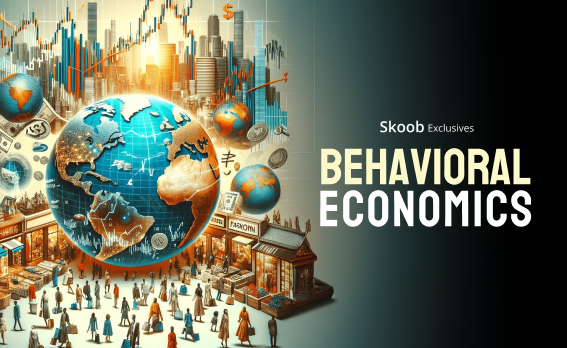
Behavioral Economics
Can a nudge change the way we make decisions?

4.3 (29)

54 mins
Understand behavioral economics and its profound insights into human decision-making, in this skoob. Discover how compelling narratives can deepen cognitive biases, leading to flawed choices in various contexts - from healthcare to consumer behavior. Also delve into the power of framing effects and how they alter our decisions in cooperative settings.
Ep 1:
The Danger of a Good Story
Compelling stories can hijack sound judgment—we explore why our brains crave narrative even when it derails rational choices, and why 'rational' decision-making may be a myth in an uncertain world.
Ep 2:
Dice Rolls and Doctors' Orders
Behavioral economics rebels rewrite the rules of choice, revealing how framing flips preferences—then we examine how financial incentives and arbitrary bias quietly steer doctors' life-altering decisions.
Ep 3:
Why Economists Give Less
Does studying economics make you selfish, or do selfish people study economics? We dig into campus experiments and then into marketing's secret playbook for shaping what we think we want.
Ep 4:
Framed: How Choices Are Built
How does simply changing a label transform generosity into selfishness? We unpack the power of framing, then question whether 'nudging' people toward better choices is genius policy or quiet paternalism.
Ep 5:
Coping in a World of Chaos
When math fails and uncertainty reigns, humans lean on heuristics and stories to cope—and we close by revealing how markets, norms, and social context secretly shape every economic choice we make.
Discussions (21)

Moses
Level 5 · 10 mo agoThinking you can run a business without stories is pure incompetence. Spreadsheets don't inspire anyone.

Kelvin
Level 7 · 10 mo agoDoctors pushing C sections because they pay better explains the massive spike in surgeries. It is scary that billing codes matter more than safety when you are delivering a baby.
Reece
Level 10 · 10 mo agoI verified the study about judges rolling dice and the podcast is right. Sentences were 60 percent longer after high rolls. It proves how easily random anchors bias expert decisions.